the aral sea
One of the greatest environmental disasters of our time.
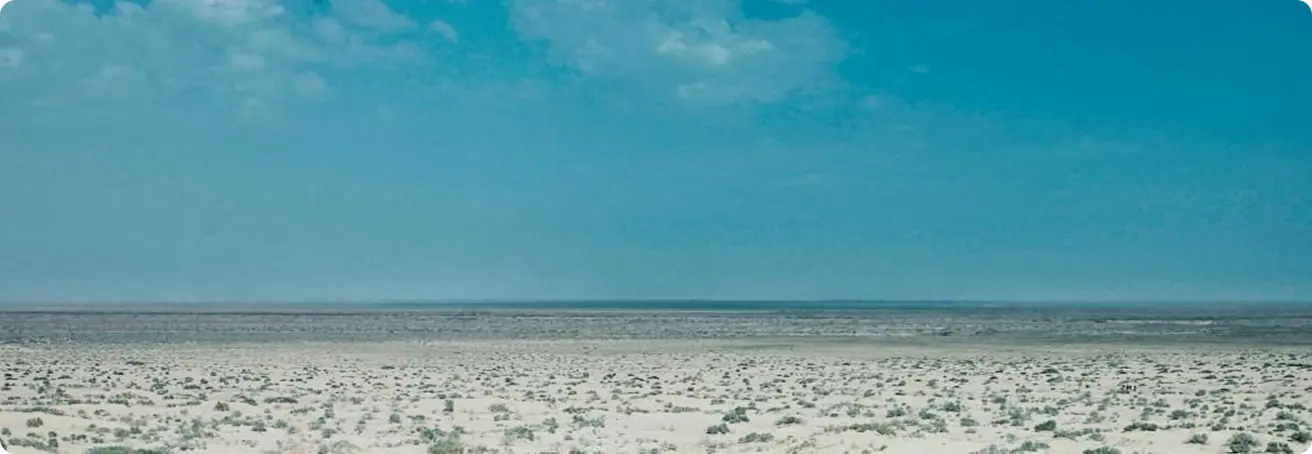
Ignorance during the Soviet Union’s peak rule led to the collapse of the Aral Sea – an ecological disaster in which the world’s fourth-largest lake was transformed into a desert within a few decades.
The drying of the Aral Sea is a monumental blow to nature, caused by human activity and the overexploitation of limited water resources in Central Asia. The Swedish Aral Sea Society (SASS) works to raise awareness about the Aral Sea and the environmental disaster, as well as to promote democracy and sustainable development in the region.
Today, the Aral Sea is divided into several smaller lakes. The Northern Aral Sea has been stabilized with water from the Syr Darya River and can once again support fish. The other lakes have salinity levels too high to sustain life. The situation for the people and animal species living around the former shores of the Aral Sea is often bleak. Unemployment, poverty, and disease are widespread in the once-thriving coastal areas. Large amounts of dried salt, fertilizers, and pesticides that have accumulated over decades are carried by the wind, contaminating the soil, air, and groundwater. Fishing has largely disappeared, factories have shut down, and schools and healthcare services have been severely depleted over a long period.
Diseases have followed in the wake of poverty and environmental degradation. Women and children have been hit the hardest, for example through high child mortality rates.
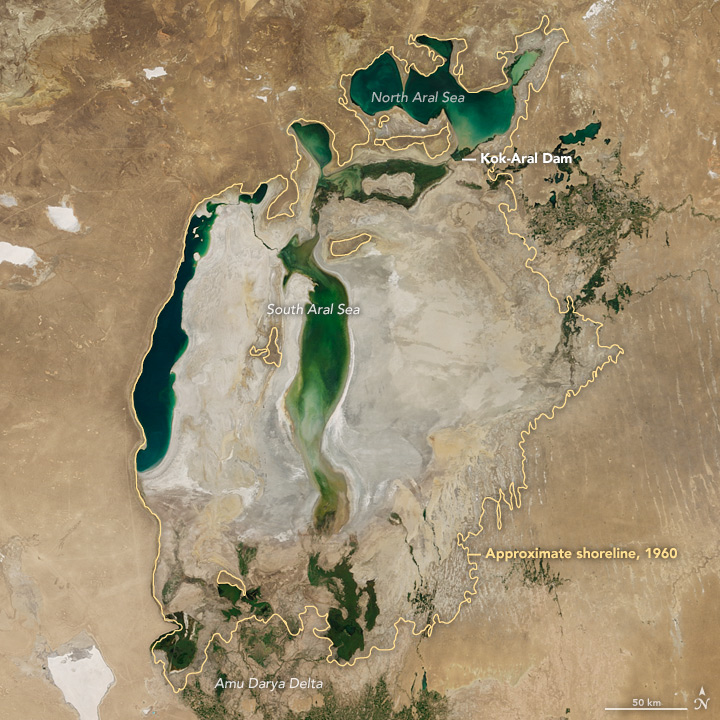
Photo: NASA Earth Observatory image by Jesse Allen, using Terra MODIS data from the Land Atmosphere Near real-time Capability for EOS (LANCE) and Landsat data from the U.S. Geological Survey.