
lesson 6c
Agriculture and food
The production, storage, distribution, eating, and management of food constitute one of the most important human impacts on the environment. At the same time, it is a most essential part of our everyday life and wellbeing. Agriculture covers 40% of the earth’s total ice-free land area. It accounts for 70% of the global fresh water use, it emits more greenhouse gases than any other human activity, it employs 3/4 of the world’s poorest people, and it feeds all of us. Agriculture is the key foundation of human civilization, and it is also where most of our present day development problems converge, such as poverty, hunger, environmental degradation and climate change.
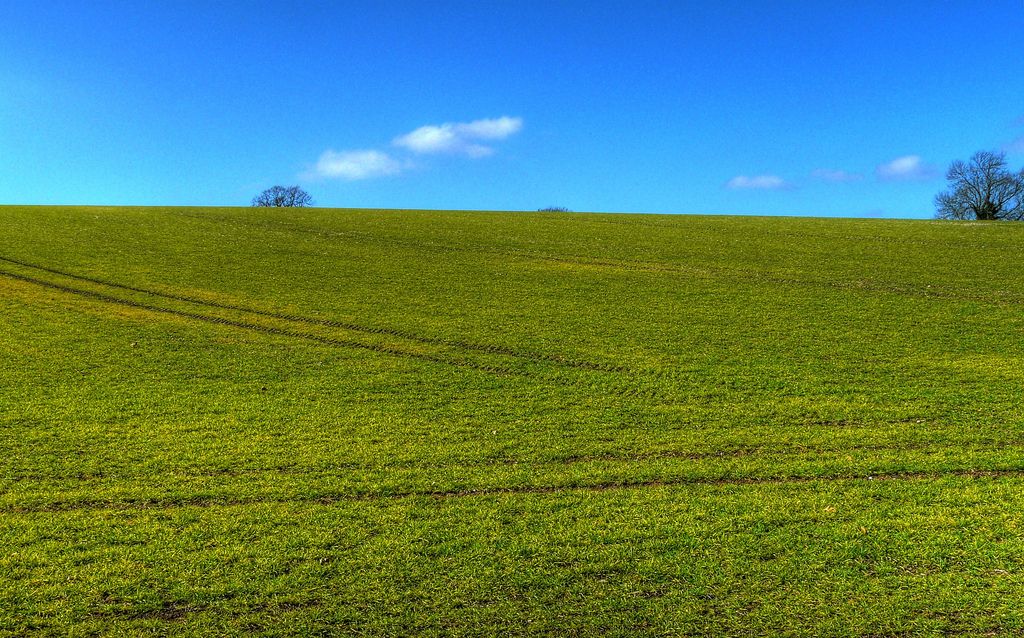
Agriculture has developed dramatically. The production and care taking of harvesting, hunting, and fishing once was the main occupation in society. In a modern industrialized country, however, only some 2-5% of the population provides all food for the rest. Agriculture and fishing has been industrialized. The production from a hectare of land has been multiplied by new methods, new genetic varieties, and input of nutrients. These developments are still ongoing, e.g. using GMOs, genetically modified organisms. The GMO technique is by itself not a threat to sustainability of the environment; it is just a method.
Industrialized agriculture depends on linear material flows of nitrogen and phosphorus, which is unsustainable. Phosphorus, mined from a few deposits in the world, will as a non-renewable resource finally become emptied. Nitrogen produced by the industrial fixation of nitrogen gas requires large input of fossil energy and is thus also in this way non-renewable. The global nitrogen flow has due to this doubled and is unsustainable. Excess nitrogen and phosphorus from agriculture is today polluting the water in lakes, coasts, and the sea in many parts of the world, and it is causing serious eutrophication.
In contrast, traditional agriculture was carefully managing the circulation of nutrients by returning manure to the fields, composting all organic waste from the preparation of food, and also by returning human excrement to farmland. Among the many efforts made today to re-establish circular flows of nutrients, we see how manure, directly or as a residue after biogas production containing most nutrients, are being returned to fields; food waste in cities is collected; and sludge from wastewater treatment plants is used for fertilization. But it is insufficient and heavy metals and toxic organic chemicals too often pollute organic waste, e.g. sludge from wastewater treatment plants.
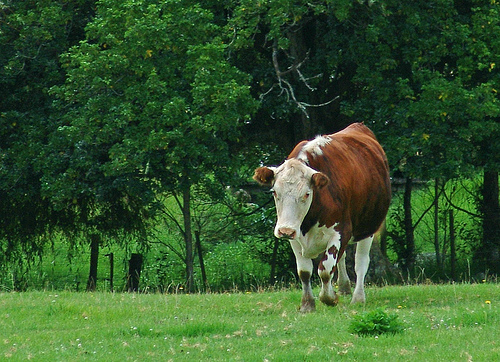
Modern agriculture produces an ever-increasing share of meat rather than grains and vegetables. In an industrial society, 80% of all we see growing on farmland is food for animals, and large parts of land are used as grazing land for animals. Meat in the menu has been increasing worldwide during the last 100 years, and in the western world it is still increasing. This is clearly unsustainable and in the future meat in our diet has to decrease significantly. The carbon footprint of one kg of beef is a hundred times that of a kg of potatoes. The excessive production of cheap meat depends on factory-like conditions, violating animal welfare. This is unethical, and it also leads to low quality food. Today in some countries it is increasingly limited by regulations.
In the western world, wasting food adds to the problem. In the EU, about 30% of all edible food is wasted, and in the US about 50%. In the US food costs are the lowest, wasting of food the highest and animal rights least respected. An important strategy to reduce the carbon footprint of food is to take care of food better and to reduce meat in the human diet.
In the Global South a major problem is that a high percentage of food is destroyed in storage, e.g. by mould and rodents, and that food is not distributed to those who needs it.
Seafood is an important part of the diet. Once, most human societies were located along coasts or rivers to secure seafood, fish, crabs, etc. Today also fishing has been industrialized, with partly terrible consequences. With modern trawls, sonars and refrigeration ships the seas have been vacuum cleaned; global peak fish occurred in the end of 1990s and several, formerly common fishes are today threatened species, e.g. tuna, swordfish, and eel. Regulations using fishing quotas have been introduced in many waters and have today led to the improvement of fishing in some European waters. It is a modern application of management of a common resource to avoid the tragedy of the commons (See Chapter 9). Aquaculture, especially of salmon, has increased dramatically, but as long as they are fed with fish from the sea it is not a sustainable practice.
Some new approaches have been introduced to increase self-sufficiency and food security. Organic farming and food is increasing rapidly in many places in the world. It relies on circulation of nutrients, limited or no-use of biocides, and secured animal welfare. In agroforestry, agriculture is conducted among trees, a system which preserves soil and water and is building new topsoil. Growing food in cities, urban agriculture, uses terraces, roofs and other areas to grow food. Most advanced is permaculture, which builds on ecological design principles, including growing your own organic food, use more rainwater, preservation of landscapes, restoration of ecosystems, and homes built from natural materials.
Food is a global commodity. This is in most cases not a serious concern as such, but it carries a transportation cost. An opposite trend is to increasingly buy food on local markets and from local producers. It leads to a more seasonal diet, often with higher quality and less cost for preservation.
Will there be enough food in the future? How will 9 billion people be able to eat without undermining the very basis for food production? The problem is aggravated by competition between food and energy crops, as well as the continuing degradation of agricultural land. Key changes are needed in this sector to achieve a transition to a sustainable society.
Materials for session 6c
Basic level
- Read A Sustainable Baltic Region, session 4, chapter 1 (pdf): Land and Productivity – Can the Baltic Region Feed Us All?
- Read A Sustainable Baltic Region, session 4, chapter 6 (pdf): Approaches to Sustainable Agriculture – Ecological Farming.
- Read EHSA, book 1, chapter 33 (pdf): Carbon Flows and Sustainable Agriculture.
- Read Urgent Call to Reduce Food Waste in the EU by Committee on Agriculture and Rural Development.
Medium level (widening)
- Sustainable Agriculture Research & Education Program. A program of UC Agriculture & Natural Resources, University of California, Davis, USA.
- Read EHSA Book 1, chapter 8 (pdf), pages 65-81: Leaching Losses of Nitrogen from Agricultural Soils in the Baltic Sea Area.
- Read EHSA Book 1, chapter 27 (pdf), pages 259-276: Consumer Demands: Organic Agriculture in Sustainable Agriculture.
Advanced level (deepening)
- Study food losses in Global Food Losses and Food Waste – Extent, Causes, and Prevention. Report to the Food and Agricultural Organization of the United Nations, 2011.
- Read How to Feed the World in 2050?. Report from a FAO convened three-day Meeting of Experts in Rome, 2009.
- Read World Review of Fisheries and Aquaculture. UN Food and Agricultural Organization, 2010.
References
Ebbersten, S. and B. Bodin. 1997. Food and Fibres – Sustainable agriculture and forestry. A Sustainable Baltic Region. Session 4.
Jakobsson, C. (ed.) 2012. Sustainable Agriculture. Ecosystem Health and Sustainable Agriculture, Book 1. Baltic University Press, Uppsala.