
Lesson 12c
Learning Sustainable Development — A Guide for Learners
The students who want to learn about sustainable development are both those registering for courses (this one, for example) and those who outside a school or university curriculum want to find out for themselves. In both groups, many students are concerned about the future and the development of their societies and what is in the future for them. Studying sustainable development is an excellent way to come to grips with these questions and be an active creator of the future. Because the future does not just happen. It is to a large extent created by us, humans.
Learning about the future is not the same as studying other subjects. It includes much of developing and expressing your own opinion on many topics. How do you want the future to look like? Forming your own opinion on these matters is best done as an exchange between fellow students or other people. Studying sustainable development is thus best done when interacting in student groups or in similar contexts.
One may start learning in many of the corners of the topic of sustainable development. For many natural science students, it may be natural to begin with climate or energy or resource flows. It may be easier to start with issues of consumption or lifestyles for social science students. For political science students it may be best to look at democracy and political participation, for history students it may be most interesting to start with the examples of civilizations which collapsed or succeeded and so on. However, wherever you start, everyone needs to continue and broaden his or her studies with other areas.
A few basic prerequisites are important to look at critically and come to grips with before going into detail in one of the many aspects of sustainability. Four such basic concepts are listed below. You may come back to them many times during your studies.
First get a basic idea of what sustainable development is in general and what it is for you. The first idea may change many times during the study of the subject. This does not mean that you did not understand the first time. It means that more and more of what you study is included, and also that the scientific material on the subject develops. There is a sustainability science, which may partly be quite complex, but that is not where you need to start. In this course, the basic understanding of sustainable development is included in Session 1.
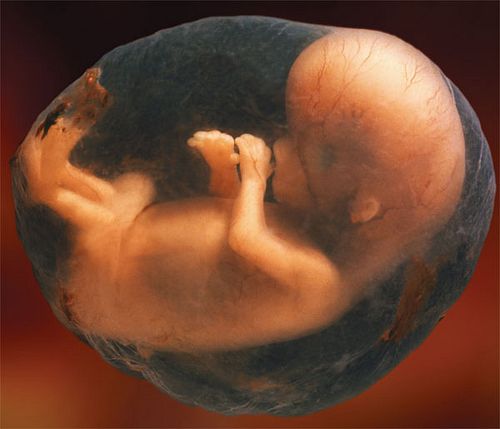
Secondly, one needs to understand the difference between growth and development. This appears simple, but is difficult to convey in today’s growth economies. The story from Dennis Meadows, grandfather of sustainable development studies, is the following: Parents got a child, and they were very proud and happy about the child growing. But in the teens, the child did not stop growing. He became 2 meters, 3 meters, 4 meters. Now they were not so happy any longer. It would have been better if the child instead of getting larger had started to study, to be interested in music, have friends etc, that is, developing. You may compare to our societies!
Thirdly, one needs to have some idea about systems. Sustainable development is about systems, most dramatically about the largest system: our Planet and all there is on it, not only humans but all nature and environment and all other living beings. If one of the components of the system, for example our societies, changes much, it will influence the other parts. Traditionally one use to say that sustainable development has an ecological, a social and an economic dimension. This simple but telling description can be much developed.
Studying sustainable development also means that you most likely are included in the growing group of people who see the necessity of change. It is not quite possible just to sit down and expect “the others” to actually make this change happen. You have to be one of those contributing to this change in a smaller or larger way. That is why one of the basic meetings about Education for Sustainable Development (ESD) was called “Learning to change our world”. The change will be in different levels. First yourself, where you may change habits or lifestyle; then economy, where you may act as consumer; and the politics where you may act as voter or by arguing for sustainability in different contexts from the smaller to the larger. You thus need to acquire some action competence.
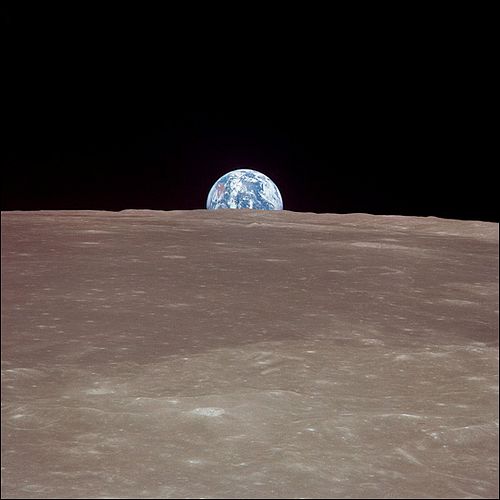
Finally, one should not forget that sustainability is about values, what we value in life, about justice and solidarity, how to be just to others and other parts of our world. You need to find out in which way your life influences others and make up your mind about if this is OK or not. If not, one should change it. Sometimes this change is not so easy. But then remember that even if change is sometimes slow and one has to accept that, the direction has to be right, that is, the changes you make should increase justice and sustainability. Then you are on the right track.
Materials for session 12c
Basic level
- Learning for a Sustainable Future, LFS, a Canadian NGO working with ESD
Medium level (widening)
- Learning for Sustainability (LfS) of Will Allen, PhD, Massey University, New Zealand is a very rich site on the topic of education for sustainable development
Advanced level (deepening)
- Systems thinking
- ESD Toolkit Rosalyn McKeown. Read the section on ethics for Sustainable Development.