
lesson 6b
Land and water
We all live on and by the land and the water of planet Earth. To care for land and water, so it may host us and feed us, is an important part of sustainable development. The surface of our planet has some 30% of land, some green and productive; others less so, like mountains and deserts, glaciers and tundra. All of these are dramatically changing: forests are shrinking; deserts are spreading and glaciers melting. The Global Footprint network estimates that there are 12.5 billion so-called global hectares, that is, bio productive land areas. This means there are 1.78 global hectares per capita to produce our food, energy, and fibres and to take care of our waste. The per capita global hectares are decreasing, both due to population increase and the destruction of land.
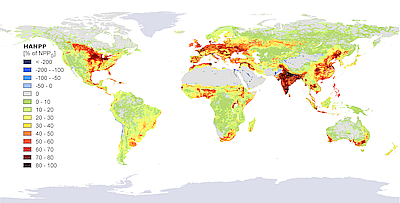
In the western world we see an overuse of land. Human activity dominates 43% of the land surface of the Earth, and we affect twice that area. One-third of all available fresh water is diverted to human use. A full 20% of the net terrestrial primary production of the Earth, the sheer volume of life produced on land every year, is harvested for human purposes. We use more than our fair share of bio productive land, in Europe about 3 times more and in the US 5 times more (see further Session 4). The Global South use much less resources, but this situation still constitutes an overexploitation of natural resources, especially of fossil energy and forests. Land resources start to become scarce, and we may expect a lack of food in the world in the future. This is corroborated by a steeply increasing price of both food and land and by accelerated foreign investments in land, especially in Africa (land grabbing).
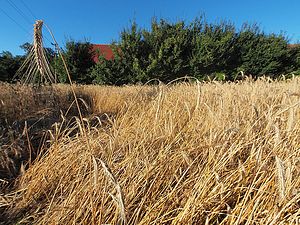
In addition, productive land is decreasing. Present land management practices decrease productive land and leads to loss of topsoil and desertification. It is estimated that the loss of topsoil is several hundred times larger than the build up of new soil and new organic content. Global warming in some areas leads to dramatically decreased precipitation and extensive droughts, making large areas unfit for production. In addition, land management practices increase emissions of GHG, especially carbon dioxide. Carbon is released through drainage of wetlands, ploughing, and all procedures, which increase the access to air, and oxidation of the organic content of topsoil.
The availability of water is equally shrinking. The overuse of surface water e.g. for agriculture, which represents 70% of water use, has lead to sinking groundwater tables, sinking water levels of the large lakes. Examples are the Aral Sea in Central Asia, Lake Victoria in East Africa. There are also dramatic changes of the largest rivers, e.g. Colorado River in North America. Melting glaciers give less water to the rivers and thus influence agriculture in the drainage areas.
The interface between land and sea is especially critical. Many coastal areas are threatened by pollution and most seriously eutrophication, that is, an oversupply of nutrients, nitrogen, and phosphorus. The nutrients stimulate the growth of algae, which consumes available oxygen and may lead to anoxic bottoms devoid of all higher life forms. In this way coastal areas in Southeast Asia, crucial for the food for billions of inhabitants, are destroyed, as are thousands of lakes and rivers in the world.
Most of the surface of the planet 70%, covered by water, makes up the seas of the world. Also, these are severely changed. The productive capacity of the seas of the world is reduced both by these changes in the conditions of the environment and also by over harvesting, especially of fish. The world oceans are furthermore facing increased acidification due to increased concentrations of carbon dioxide turning into carbonic acid when dissolved in the water. So far, about 50% of CO2 emissions have been dissolved in the oceans. The changes are especially serious to coral reefs, very special ecosystems that harbour some 50% of marine biodiversity.
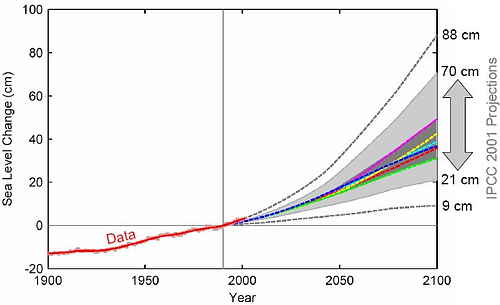
In the long term, coastal areas face yet another difficulty. Due to global warming, sea levels will rise. According to predictions of climate models, low-lying coastal areas, for example in Southeast Asia, will be flooded as this will happen towards the end of this century.
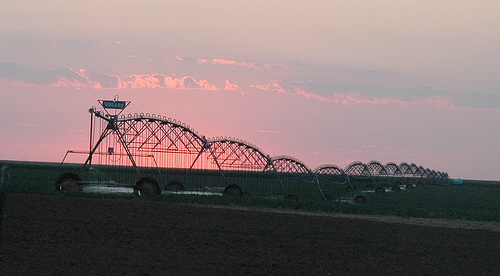
Several measures to safeguard land and water have been introduced. Landscape protection, included as one measure in the Biodiversity Convention, cover about 20% of all land surfaces on Earth. Improved land management measures, such as agroforestry, minimum tillage or use of bio char, have also been implemented to keep topsoil intact and retain the productive capacity of land, e.g. in many projects in Asia and Africa. Tree plantation is done on a large scale in many places, both for climate mitigation and to improve ecosystem services. New techniques for irrigation in agriculture may dramatically reduce the need for water. Most importantly, restoration of ecosystems is possible also at large scale and in areas severely degraded and barren. Such restoration projects demonstrate how soil, greenery, and water can return, people get new livelihoods as food production, economic life and wellbeing is strengthened.
Of the international conventions introduced to protect land and water of the world, the most significant are the United Nations Convention to Combat Desertification, UNCCD. It is regrettably the weakest of the Rio conventions, as it is lacking its own financing. Agreements on Reducing Emissions from Deforestation and Forest Degradation (REDD) are included in the Climate Convention, as it has a great influence on GHG emissions. Wetland preservation is covered by the already old Ramsar convention. This convention is focused on the preservation of biodiversity rather than on the productive capacity of land and water. There is no convention to protect the oceans of the world, which thus face e.g. unregulated fishing, in addition to e.g. dumping of waste, most seriously plastics which remain in the water. EU directives protect landscape, meadows, and surface waters.
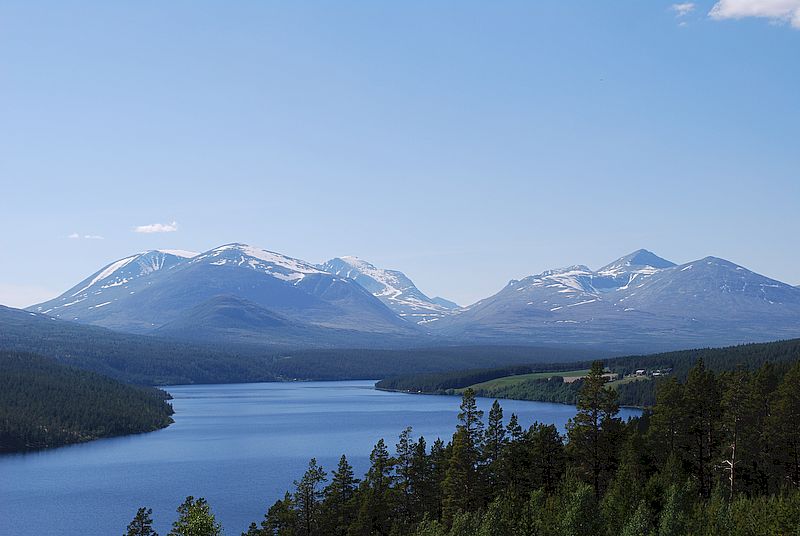
The landscape with its land and water, forests and fields, are of immense importance for the wellbeing of us humans. Not only for its physical services such as providing food and water, but also as a living environment, for its cultural and spiritual significance, and as the means by which we are connected to the past and the future of humankind. We should leave planet Earth to our children and grandchildren to enjoy just as much as our ancestors and we have.
Materials for session 6b
Basic level
- Read Environmental Science, chapter 7 (pdf), pages 187-195 and 196-201: Society and Landscape
- Study the basics of footprint science on Global Footprint Network homepage.
Medium level (widening)
- Read Water Use and Management, chapter 1 (pdf): Water Resources and Water Supply.
- Land Resources planning (LRP) to address land degradation and promote sustainable land management (pdf-file). Food and Agricultural Organisation of the United Nations.
- The world’s remaining great forests by Jessica Aldred, the Guardian.
- Wikipedia: Biome.
- Living Planet Report 2022.
- The Baltic Sea, a film by Markus Nord (YouTube film).
- Green Gold – Environmental filmmaker John D. Liu documents large-scale ecosystem restoration projects in China, Africa, South America and the Middle East, highlighting the enormous benefits to people and planet of undertaking these efforts globally (YouTube film).
Advanced level (deepening)
- Study Desertification and the UNCCD by Phillip Cullet, University of London, and at the home page of the UNCCD.
- Study Deforestation: Facts, Causes & Effects at Livescience.
References
Grooten, M. (ed.). 2012. Living Planet Report 2012 – Biodiversity, biocapacity and better choices.
Lundin, L. C. (ed.) 2000. Water Use and Management. Sustainable Water Management book 2. Baltic University Programme, Uppsala.
Rydén. L., Migula, P and M. Andersson. 2003. Environmental Science – understanding, protecting, and managing the environment in the Baltic Sea region. Baltic University Press. Uppsala, Sweden.