
lesson 7c
Freight
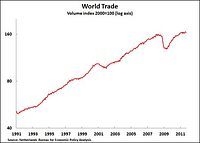
Freight is the transport of goods from one site to another. International freight is part of trading and, national freight of business operations. Freight and international trade has been part of our societies since our deepest history. In the Baltic Sea region, we had the Hansa as a medieval trading network. Today it is the European Union in which free trade is part of the four freedoms – free mobility of people, goods, services, and money – as its fundamental goals. Trading increases since several years, with about 6% annually in the Union. With globalization, transport routes are also increasingly global: We eat bananas from Guatemala, lamb from New Zealand, drive in Japanese cars, and our toys are made in China.
The original reason for trade was to distribute goods from one place to another, where it did not exist. Today this is still valid, but much more important is that business reduces costs by allocating the manufacturing of goods or other kinds of production to places where it is most advantageous, mostly because of cheaper labour. As the cost of freight in general is low – on average about 6% of the price of a product is due to transport – this relation is expected to continue, at least until the cost of transport increases. Today, road transport in the EU is increasing faster than GDP.
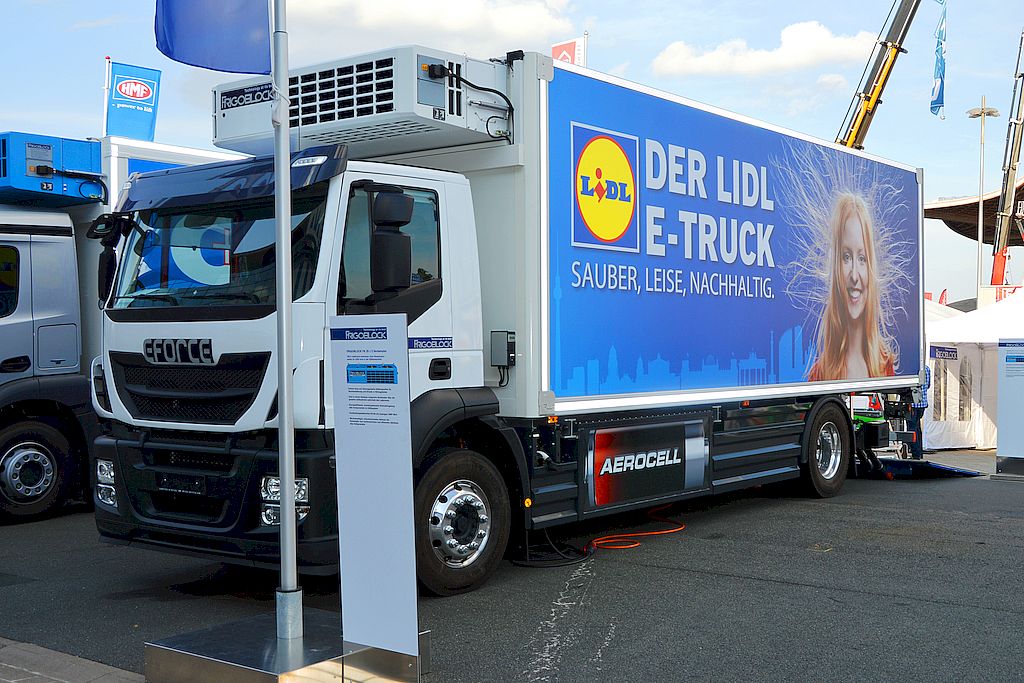
Transport and freight have costs, many of them not included in the price. They mostly depend on the use of fossil fuels in cars, trains, ships, and aircraft. To this is added air pollution, especially from ship transport, which too often uses dirty oil, but also by cars. Freight traffic is dominating our traffic infrastructure and requires even more expansion of roads. Trucks cause road accidents, congestion, and ships cause oil spills. The costs of these are mostly external, that are not included, in the price of the products. Environmental costs of transport were estimated to be 500 billion Euros for 19 member states in year 2000. Emissions of CO2 caused by road transport increased 17% between 1995 and 2005. In Western Europe, 73% of total land freight transport was on road in 2005.
Which are the possibilities to increase the sustainability of the freight sector? Obviously, it cannot continue to grow forever. Probably this requires that the costs for services have to be more equal in different parts of the world. Consumer pressure to buy items, which are locally produced, is another factor most important for food. The solutions are much seen as technical rather than decreasing transport. Increase of train use, use of electric powered trucks, e.g. by having electric cables along main routes is a much discussed option, as is improved organization.
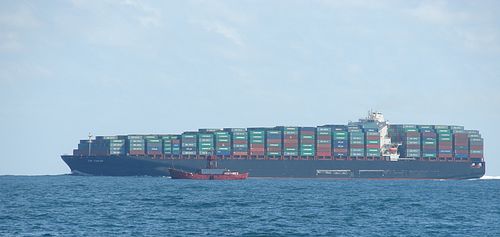
The freight sector itself may also organize itself in ways that drastically reduces emissions and pollution. Thus, moving transport from roads to railroads is an important step, especially if the trains use renewable electricity. A way to do this is to use so-called intermodal transport. This means that goods may use several modes of transport – road, rail or ship – during its journey. The standard container allows goods to be packed in containers, which may be moved from car to rail to boat to car. The shift from one mode to another occurs at intermodal junctions. To make intermodal transport a future standard for goods handling is now EU policy.
Materials for session 7c
Basic level
- Read A Sustainable Baltic Region, session 6, chapter 9 (pdf): Freight Transport – How to Make it Sustainable.
- Read Roadmap to a Single European Transport Area — Towards a competitive and resource-efficient transport system (EU Commission report)
Medium level (widening)
- Read A Sustainable Future for Transport: Towards an integrated, technology-led and user-friendly system (EU Commission report)
- Greening Transport Package – Frequently asked questions
- Read 12 Trends That Will Drive the Future of Transport
Advanced level (deepening)
References
European Commission. 2009. A sustainable future for transport — Towards an integrated, technology-led and user-friendly system. Publications Office of the European Union, Luxembourg.
Tengström, E. and M. Thynell. (eds.) 1997. Towards Sustainable Mobility – Transporting people and goods in the Baltic Region. A Sustainable Baltic Region. Session 6. Baltic University Press, Uppsala.