
Lesson 9b
International cooperation and world order
No country can achieve sustainability on its own. International cooperation has therefore become a necessary feature and is developed on a number of levels and on different scales. On the global level the United Nations and all its organisations are the most important. In Europe the European Union is the most important, and there are similar organisations in other parts of the world, mostly focusing on economic matters, as well as cooperation between smaller groups of countries including the countries around the Baltic Sea. Finally among NOGs there is a vivid international networking taking place, and many of the most important organisations for promoting sustainable development are international.
The United Nations was created in 1945 to safeguard and build peace in the world, but very soon it took on a much wider spectrum of resposibilities. UNESCO, United Nations Educational, Scientific and Cultural Organization was formed in 1945; IUCN, the International Union for Conservation of Nature and Natural Resources today called the World Conservation Union, was formed in 1948; and UNDP, the United Nations Development Programme was formed in 1965 and UNEP, the Environmental Programme in 1972. A number of special organisations are part of the UN family, such as the World Health Organisation, WHO, and World Meteorological Organisation, WMO. All of these have major roles in UN’s work for Sustainable Development. UNESCO has a main responsibility for the decade for Education for Sustainable development, ESD; IUCN is mainly responsible for the work to protect biodiversity, and UNEP for the environmental work.
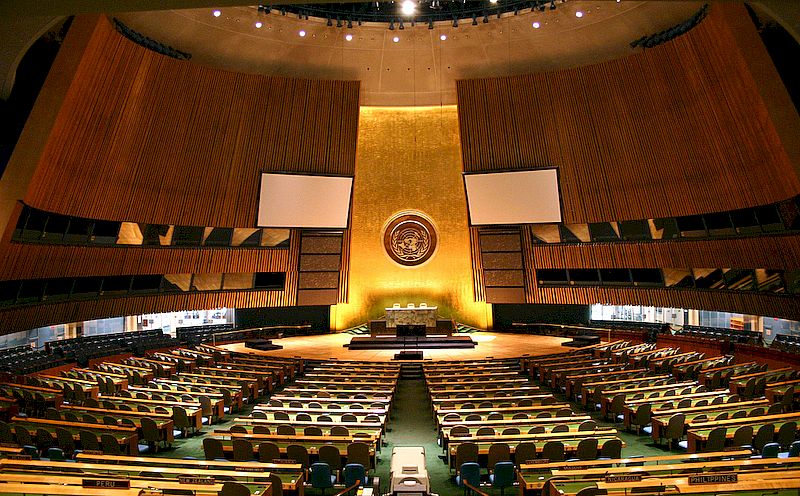
Before and after the groundbreaking UNCED conference in Rio de Janeiro in 1992, the UN work for sustainable development took new ground. The CSD, Commission for Sustainable Development, coordinated at the UN headquarter in New York, got the task to follow up the work started and agreements reached at the Rio Conference, especially the Agenda 21.
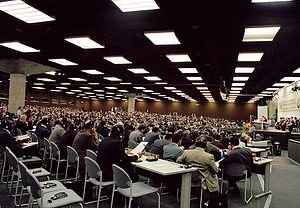
International cooperation takes the form of global conventions, agreements between governments on specific topics. Three of them, the Rio conventions, were created in connection with the Rio conference: the Framework Convention on Climate Change UNFCCC, the Convention on Biological Diversity, CBD, and the United Nations Convention to Combat Desertification, UNCCD. Long before that several other global agreements had been created and implemented; among the earliest, from 1958, are the conventions to protect international waters, including the convention on protection of fishing and fishing resources.
International negotiations have limitations. The UN system mostly relies on consensus, but the present 194 member states very seldom agree completely. This is illustrated by the climate negotiations, which has been unsuccessful, as there is no global agreement on limitation of emissions of GHGs, despite efforts since the Climate Convention was created 20 years ago. Similarly the other Rio Conventions have very few binding obligations for the parties. There is thus very little of a global legal structure with agreements, monitoring, reporting and sanctions for states, which break a decided agreement. It is quite different from the European Union, where such agreements are the norm. We rather have a system where states proceed according to an international agenda as they deem it is in their own interest to do so.
The United Nations constitutes a crucial meeting arena for all countries in the world, also those, which are in deep conflict. The UN organisations continuously organize smaller and larger meetings of all kinds, especially on peace and conflict issues, on economic development etc. and all member states meet yearly in the UN General Assembly. Among the ground-breaking conferences on the global level we should mention the largest so far, the 1992 UNCED conference, the 2002 Johannesburg World Summit on Sustainable Development and the Rio+20 conference in 2012. Of special relevance for sustainable development are the two conferences on Human Settlements, called Habitat from 1976 and 1996 and four world conferences on women, the latest in Beijing in 1995.
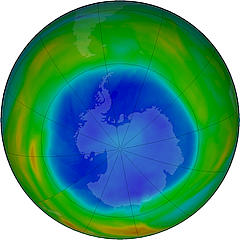
Many conventions are more specialised and on a lower level. Still the United Nations plays a main role in their management and implementation. These include two very successful conventions on air pollution. The Convention on Long-Range Transboundary Air Pollutants from 1979, is a convention in the UN Economic Commission for Europe, while the Vienna Convention for the Protection of the Ozone Layer and its Montreal Protocol on Substances that Deplete the Ozone Layer, from 1987 was initiated between 20 countries, later expanded and then managed by a Fund of three UN bodies, including UNEP, and the World Bank.
The main concern for the United Nations is to safeguard peace. In this regard international cooperation has been successful. Today there are no classical interstate wars in the world. The number of armed conflicts – typically about state power or the definition of the state – are still large but since some years slowly decreasing. Skilled negotiators contribute to conflict resolution and the number of interstate peace agreements is increasing. The economic development of the world contributes. Economic cooperation is increasingly a better option than conflict, and economic alliances, such as the EU, constitute security communities, where conflicts do not escalate to armed confrontations. But most important is increased democracy. Democracies do not enter into armed conflict with each other. In a sustainable world war will be found only in the history books. Of future international security threats most often mentioned are the climate threats such as extreme weather events, heat waves and failed harvests. If future competition on key resources, such as oil and other energy resources, or an increasing number of climate refugees, will lead to new wars, remains open.
Many argue that the world is in such a danger that we need a global government, a global legal order. The United Nations is not that. On the contrary the Security Council, which is a key body in the UN system, is limited by the willingness of several major powers not to use their veto to stop a proposal. Proposed reform of the UN system has not been executed. Some see this with regret and even despair. Others argue that compared to the situation just some decades ago progress has been enormous. After all, there are a number of global organisations which do an enormous work to improve the situation in many countries. There are a number of agreements, which have been reached, successfully implemented and which are efficient.
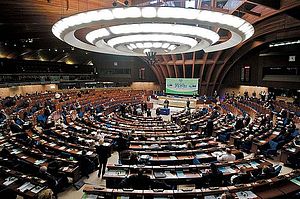
On the European level the European Union has played a main role. It started as a cooperation between six states on coal and steel in the 1950s. Today it is the most developed international cooperation in the world, with 27 member states and 3 more participating in legal and economic matters. The European Union was originally a peace project after hundreds of years of conflict in Europe, and based on economic cooperation EU soon became of key importance for environmental protection and sustainable development. The Union adopted its first environmental laws in the 1970s. A more serious environmental policy started with the 3rd Environmental Action Programme in 1983. Since then EU environmental and sustainability policies have developed rapidly and a strategy for Sustainable Development was adopted in 2001. Today the EU has an extensive body of environmental directives and regulations many of which are of key importance for sustainable development work in the Union.
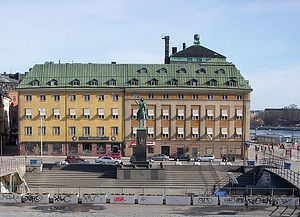
In the Baltic Sea region development of cooperation has been strong and early. The negotiations for a convention on the protection of the Baltic Sea started immediately after the Stockholm conference in 1972. It was signed in 1974 and ratified by all parliaments in 1980. A much updated and expanded convention text was signed in 1992. The Council of the Baltic Sea States, CBSS, with 12 member countries was formed by the foreign ministers in the region in 1992. In 1996 prime ministers from all the countries met in Visby on Gotland to sign an Agenda 21 for the Baltic Sea region, the first regional Agenda 21 in the world, called Baltic 21. It is today part of the CBSS. These Intergovernmental organisations, IGOs, are only the most important of a long series of cooperative structures which include local authorities in Union of Baltic Cities, a long series of NGOs, such as WWF, and financers of sustainable development work on national and EU levels.
Materials for session 9b
Basic level
- Study international cooperation in Environmental Science, chapter 23 (pdf), especially pages 693-702: International Cooperation for the Environment.
- Study Environmental Science, chapter 23 (pdf), especially pages 702-705: International Cooperation for the Environment.
- Read Environmental Management, book 1, chapter 2 (pdf), pages 39-52: The Development of the European Union Environmental Regulation.
- Read The Baltic Sea Region, chapter 22 (pdf), pages 300-307: The Civil Society: Parties and Associations.
- Read The Baltic Sea Region, chapter 25 (pdf), pages 333-343: Malfeasance in Contemporary Democratic Societies.
Medium level (widening)
- Study the European Union environmental cooperation in Environmental Science, chapter 23 (pdf), especially pages 706-717: International Cooperation for the Environment.
- Study the Baltic Sea region environmental cooperation in Environmental Science, chapter 23 (pdf), especially pages 718-726: International Cooperation for the Environment.
Advanced level (deepening)
- Study the European Union policy for Sustainable Development.
- Study the management of the Global Conventions: Signing, Ratification, Entry into force, Convention secretariats, Protocols and Conferences of the Parties, COPs. Begin with Environmental Science, chapter 23 (pdf), especially pages 697-702: International Cooperation for the Environment and then look at the home page of a convention of your choice.
References
Klemmensen, B., Pedersen, S., Dirckinck-Holmfeld, K. R., Marklund, A. and L. Rydén. 2007. Environmental Policy – Legal and Economic Instruments. Environmental Management Book 1. Baltic University Press, Uppsala.
Maciejewski, W. (ed.). 2002. The Baltic Sea Region – Cultures, Politics, Societies. Baltic University Press, Uppsala.
Rydén, L., Migula, P. and M. Andersson (eds.). 2003. Environmental Science – understanding, protecting and managing the environment in the Baltic Sea region. Baltic University Press, Uppsala.
BUP Sustainable Development Course