
Lesson 4a
Urbanization
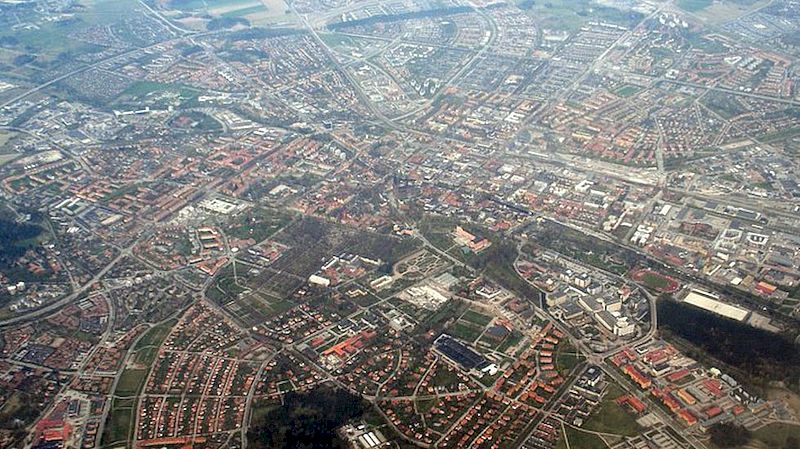
Most people live in cities and towns; the development of the local society is therefore a key issue in sustainability science and practice. In this session, we will address the issues of urban and sometimes rural life and ask how the two forms of habitation are approaching sustainable development.
In the Baltic Sea region the degree of urbanization is in the West typically 85% and in the Eastern part slightly less. The trend today is that smaller and more remote towns and villages get depopulated while the larger cities grow in size.
In the world as a whole, we presently see the largest wave of urban growth in history. Since 2008, more than half of the world’s population, 3.5 billion people, live in towns and cities. By 2030 this number is expected to swell to almost 5 billion. Urban growth is concentrated in Africa and Asia; in the Baltic Sea region, the picture is more mixed. Some large cities, e.g., Stockholm and Warsaw, grow steadily as more remote corners of the countries are depopulated. Other cities, e.g. Riga, decrease in size as many leave to find jobs elsewhere. Urbanization may end at about 80%. There is also a smaller opposite trend as families in cities move to the surrounding countryside, a re-ruralisation, for lifestyle and sometimes economic reasons.
There are good reasons for urbanization. The first cities were built as marketplaces where trade was made and money was generated. Also, today people and business move to cities to find jobs, education, and housing and at the same time reduce time and expenses for travel and transport. Urban living permit individuals and families to take advantage of the cities’ diversity, culture, and marketplace competition. With good governance, cities can deliver education, health care and other services more efficiently than less densely settled areas simply because of scale and proximity. Equally important is that people leave the countryside as agriculture modernizes, job opportunities get more scarce, and life becomes increasingly difficult. While rural life tends to be conservative, cities present opportunities for social mobilization and women’s empowerment. This phenomenon of rural flight is known since a hundred years.
But both rural and urban life are needed for a good future. The rural society will provide the cities with resources needed, such as food, energy etc. The footprint of a city is often more than a hundred times that of the city area itself. Both rural and urban areas have their specific challenges in improving sustainability. For rural life see Session 6 For city life we will here ask how to use the advantage of many people living close to each other. We need to find good answers to this question in all dimensions of sustainability – ecological, economic, and social.
Urban planning is a key skill in designing good cities, in which the inhabitants find wellbeing, security, and support. So-called “ideal cities” have been designed since antiquity. Today city planners looking for improved sustainability try to increase self-reliance – especially for energy, water and sometimes food. Very critical issues for an attractive and sustainable city are good public transport, attractive public spaces, greeneries, and waterfronts. These also enhance urban ecosystems services. The social aspects of a city are equally important, such as good schools and good green areas etc. That “the inhabitants like to live in their city” is the most important sustainability indicator. The downside of urban growth is often suburbanization. Suburbs are often less functional, and it can be a challenge to make them more multifunctional with working places, better conditions for a social life with cafés etc and cooperation between the inhabitants to improve sustainability.
Environmentally cities were during a very long part of their history, often up to the early 20thcentury, disasters. Pollution was rampant, especially water was contaminated in cities, but also air was bad and foul. This situation culminated in the late part of industrialization, when life expectancy in cities was much lower than on the countryside. The introduction of improved water and waste management, hygiene and sanitation, and the construction of flat houses with less crowded living conditions improved this dramatically. Today resource management, the heating of buildings, distribution of water, and collection of wastewaters and the management of solid waste may be made very efficient in a city.
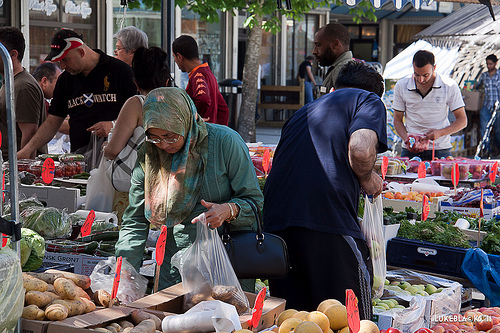
Socially and economically, urban life has much to offer its inhabitants. This includes better basic as well as specialist services, a greater variety of job opportunities, better health services and hospitals. A greater variety of entertainment such as restaurants, film theatres, etc., and education, in particular universities, and more diverse social communities, are not always possible to find in rural areas. In spite of these possibilities, still urbanization is also accompanied by social degradation and loss of welfare. Many people coming to the cities hoping for a better life, ends up in poor housing, long distances to jobs if they find any and isolation as family and friends have been left behind. The large slum areas in the megacities in the developing world do not have exact counterparts in the Baltic Sea region. Still there are typical problems areas in the outskirts of big cities, where the less fortunate concentrate, as housing is cheaper or for rent, not for sale.
Finally, cities are often centres in regions consisting of a central larger city, smaller towns and countryside. The size of such regions typically allows inhabitants to look for work and social services. For hundreds of years they were not larger than it was possible to travel from one end to the other, often by foot, in one day. Today, travel by car or public transport has made these regions much larger and dependent on efficient train or bus traffic. Such regions are increasingly administrative units as well-meaning that they constitute counties within which the authorities are responsible for spatial planning, and coordinate infrastructure, schooling, health care and often also nature protection.
Sustainability may increase if cooperation within a region is promoted. Cities depend on the surrounding countryside for their supplies of food and other materials. The ecological footprint of cities may be hundreds of times larger than the cities themselves. Urban-rural cooperation relying on the immediate areas of cities is important for improving the sustainability of cities. Still, the use of food from the near countryside or the recycling of residues (e.g. sludge) to the near countryside is not common. Cooperation between the city and its surroundings is improved by a properly designed interface between the two.
Materials for session 4a
Basic level
- Read Environmental Science, chapter 7, pages 202-205: Society and Landscape – Space intrusion and habitat destruction (pdf).
- Read A Sustainable Baltic Region. Session 7, chapter 5, pages 32-35: Regionality and Settlements (pdf).
- Read A Sustainable Baltic Region. Session 7, chapter 1, pages 5-10: Living Patterns in the Baltic Region – Moving to the Cities (pdf).
- Read A Sustainable Baltic Sea Region. Session 7, chapter 7, pages 41-43: Approaches to sustainable habitation II – Sustainable Neighbourhoods (pdf).
Medium level (widening)
- Study the resource base of sustainability in cities in The City as a Sustainable Living System (pdf). Chapter 4 in Basic Patterns of Sustainability Superbs Case Studies Vol. 1.
- Study Chapter 10 Urbanism in Challenges of Sustainable Development in Poland Edited by Jakub Kronenberg and Tomasz Bergier.
Advanced level (deepening)
- Study the situation in a chosen city by collecting data on energy, water, waste, traffic, and greenery. Data on several cities are found in the BUUF project city reports.
BUUF City Status Report 1: Water Management (pdf)
BUUF City Status Report 2: Energy Management (pdf)
BUUF City Status Report 3: Waste Management (pdf)
BUUF City Status Report 4: Traffic and Transport (pdf)
BUUF City Status Report 5: Urban Green Structures (pdf)
References
Andersson, H., Berg, P. G. and L. Rydén, L. (eds.). 1997. Community Development – Approaches to Sustainable Habitation. A Sustainable Baltic Region. Session 7. Baltic University Press, Uppsala, Sweden.
Kronenberg, J. and T. Bergier (eds.). 2010. Challenges of Sustainable Development in Poland. Centre for Systems Solutions, Wrocław, Poland.
Rydén. L. (ed.). 2002. Basic Patterns of Sustainability. Superbs Case Studies, Volume I. Baltic University Press, Uppsala.
Rydén, L., Migula, P. and M. Andersson (eds). 2003. Environmental Science – understanding, protecting and managing the environment in the Baltic Sea region. Baltic University Press. Uppsala, Sweden.
BUP Sustainable Development Course